Sometime, in the process of going along and living our lives, there are serendipitous moments that deepen our respect for the subtle but deliberate crafting by Someone who is watching over us and very interested in us as we move in and out of our days.
I am in the process of reading a book right now titled Originals: How Non-Conformists Move the World, by Adam Grant. And this week, just before we celebrate Martin Luther King and his ideals, I have come across Grant’s theory of how sometimes procrastination can be beneficial. He says, “Once a task is finished, we stop thinking about it. But when it is interrupted and left undone, it stays in our minds. ” He uses the powerful example of Martin Luther King:
Great originals are great procrastinators,
but they don’t skip planning altogether.
They procrastinate strategically, making gradual progress by testing and
refine different possibilities.
During the year of his ‘dream’ speech alone it is estimated that [King] traveled over 275,000 miles and delivered over 350 speeches. While King may have deferred writing the ‘dream’ speech, he had a wealth of material at his disposal that he could draw upon extemporaneously, which made his delivery more authentic. (He waited until four days before the march [on Washington mall] to actively begin working on the address.)
As King walked to the podium to
deliver his speech, even as he approached the microphone, he was still revising
it. ‘Just before King spoke,’ politician Drew Hansen writes in The Dream, ‘he was crossing out lines
and scribbling new ones as he awaited his turn,’ and ‘it looked like King was
still editing the speech until he walked to the podium to deliver it.’
At the podium, King expanded the
line [from a speech called the Constitution and the Declaration of
Independence] to emphasize racial equality: ‘a promise that all men—yes, black men as well as white men—would
be guaranteed the unalienable rights.’
It was eleven minutes into the speech that Mahalia Jackson [King’s favorite
gospel singer, seated behind him] called for King to share his dream. It is unclear
whether he heard her, but ‘just all of a sudden, I decided,’ King recalled. He followed
the emotion of the moment and unfolded his dream.
Before a live crowd of 250,000, and
millions more watching on TV, King improvised, pushing his notes aside and launching
into his inspiring vision of the future. ‘In front of all those people,
cameras, and microphones,’ Clarence Jones reflects, ‘Martin winged it.’
[Clarence Jones was MLK’s personal counsel and speech writer.] By the time the
speech was done Hansen notes, ‘King added so much new material to his prepared
speech that the length of his address nearly doubled.’
Half a century after King delivered
his momentous speech, four words are etched into the stone tablets of our
collective memory: ‘I have a dream.’ It remains one of the most recognizable phrases
in the history of human rhetoric, as it painted a vivid portrait of a better future.
I loved gleaning the background of the writing and delivery of this speech, and thought it would be a good share for today. Here is a portion of that speech. In addition, enjoy the James Taylor tribute to MLK, in his song Shed a Little Light.

1963 March on Washington for Jobs and Freedom – Martin Luther King Speech
https://www.youtube.com/watch?v=3vDWWy4CMhE (5 min.)
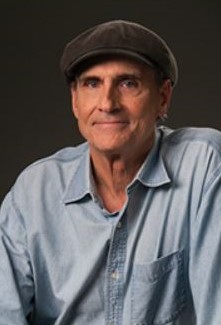
Shed a Little Light – James Taylor
https://www.youtube.com/watch?v=sM7j1kf46wo (4.5 min.)
 Mom's Tender Mercies