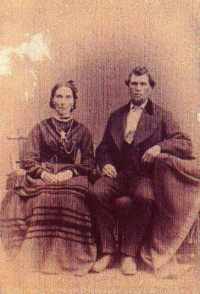
100 Years

Last week we marked the 100th birthday of my father-in-law, Verle. He passed from this place five years ago, in fact, the day after his 95th birthday, so it’s easy to keep track. By his own admission, he grew up in a somewhat idyllic situation, surrounded by a multi-generational family, farm country life, aunts and uncles from both sides of the family doting on him, cousins for his best friends, plenty to eat and much to do and explore in his small yet religious central Utah community.BREINHOLTFamily Marj Roda Clare Harvy Oliver Verle-from Cleo
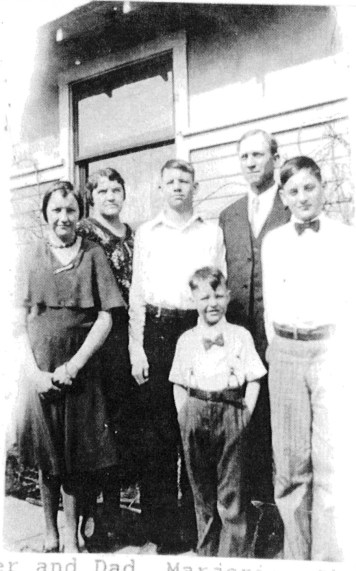
As his family migrated to the bigger city for opportunities and work, he did his best to blend in with his new surroundings and culture, but he always called Venice “down home,” even as a grown adult. This beginning set him up to confidently face a long life of challenge and trial, greased the gears of his ingenuity, taught him the power behind a smile and a sunny disposition, and gave him a chance to exercise integrity.  Like most kids, he created his own learning experiences by following his curiosity and innocence, and he witnessed first hand the sorrow and despair of loving parents trying to keep a growing family afloat during those depressive years.

At age 19 he planned to serve a mission for his church, which created nearly an insurmountable financial challenge for the family. but with faith and optimism, he lined up wonderful speakers (Philo T. Farnsworth was one of them) and musical entertainment for his missionary farewell in hopes to bring in a large audience with big hearts and generous donations supplementing his meager funds. He turned out to be the show stopper by producing a bloody nose when his turn came to stand at the pulpit.

Going to Denmark in the fall of 1938 was risky business with the world affairs in such turmoil, and after a partial mission there, he and all his fellow companions were reassigned to “safer” places; he went to the Southern States. The names of the rural towns he frequented are listed in his personal history: Townley, Double Springs, Sulligent, Mud Creek, Holly Springs, Decaur, Athens, Elkmont, Leeds, Sneed, Sylacauga, McCalla, Bessemer, Greenpond, Atalla, Anniston, Cherokee, Cullman, Arkadelphia, Tusculoosa, Hamilton, and Red Bay. He collected people–he loved them–and remembered their names, too: Roberts, Evans, Browns, Griffens, Locks, Gaylors, Silveys, Randalls, Moores, Smiths, Ganns, Mitchells, Eaves, Youngs, Hicks, Vinning, Brockners, Sanders, Ackers, and Largens. That was his mission, but throughout his life he continued gathering people, knew their family members and stories, and carried them with him.

He met and married a Southern belle, and although not wealthy, she was a treasure and true to her well-mannered and principled upbringing. After a few short months, he went off to war in Germany, given the incredibly impossible job of switching from saving souls to destroying lives. He quickly became a leader and did the task he was charged with, and in the process earned medals (for which he never comfortably accepted any adulation) and headed up the force which freed Buchenwald concentration camp (which he couldn’t talk about for over 50 years) and then rode a ship back to the U.S., welcomed into the New York harbor by Lady Liberty (an experience he never related without choking in his voice and tears).

He put those three years behind him and jumped into life, built a home, raised a family of ten children (his own basketball team plus subs and a couple of cheerleaders). He joined a family business with his dad and brothers laying brick, creating work opportunities for his own children. He loved being involved in his community and found ways to serve in his church. He and his wife also piloted a Cub scout program, he coached little league teams, and they raised animals and a huge garden on an acre plus behind his home. Then as the kids started leaving, he and his wife collected strays, listened to their stories, bound up their wounds. Gladys fed them and Verle employed them, and gently sent them on their way when their visitors were once again grounded.

Soon a second family of sorts began to form as everyone married and produced the best crop of all, grandkids.  The history goes on and on. . .

How do I know these few details, plus endless others? Verle wrote down his history. He put in little bits of interesting information everywhere, just like in life; he was a collector: rocks from the Hebron Brook in Israel, notated with black permanent marker, dated maps from Germany that directed him and his tank destroyer crew across the foreign terrain, marbles made from Redmond clay originating from his youth, feathery cotton still in the dried husk from a South Carolina field–you name it, he had some meaningful artifact holding a portion of his collective memory of life experiences, 95 years’ worth.

In the last few weeks of his life, he was stuck in his bed, but, still smiling and positive, he embellished each day with a recitation of the names of all of his descendants: kids, married-ins, grandkids, great-grands, pushing the numbers up to and past 125 before his death.

Verle's birthdayHappy Birthday, Verle. Thank you for including me in your collection.

(photo by Tiffany Breinholt)


Searching for Thirza, part 3

cedar fort

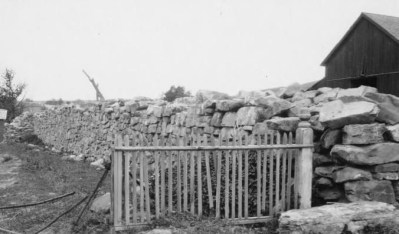
Cedar Fort, Utah (from Utah State Historical Society)

When Thirza Angelina Hale Nay settled in Cedar Fort, Utah, she was in the company of other families of settlers, but living there was challenging to say the least. From the book Nay Family in Utah and the West:   “Life in the uninhabited Cedar Valley was  not easy. Logs for homes and the fort had to be brought from the nearby mountains. Water had to be directed for irrigation and gardening. And the Indians proved troublesome.” It was a far cry from the lush and green hills of Vermont and New Hampshire, where she had been raised, or even the rolling plains of the Midwest where she had traveled and camped with other saints since leaving Nauvoo.

This was not the only challenge. As the attacks from the Indians subsided, a new problem came on to the horizon. From the book again: “That re-commitment to gospel principles may have been sorely tested two years later when Utah residents learned that President James Buchanan was sending a large contingency of soldiers to the territory to put the the so-called war against federal authority by the Latter-day Saints.  In reality, the “war” was emotional rhetoric on both sides debating Utah Territory’s request for statehood. Among other things, the practice of polygamy was at the head of the list of the emotionally charged debates.”

In 1857, amidst the physical threats and challenges came a new personal one for Thirza. She and her husband John received a second Patriarchal Blessing (a blessing “given to worthy members of the Church contain[ing] personal counsel from God.” lds.org). The wording of this blessing indicated she may be called to live the law of polygamy, and apparently she drew the line. We don’t really know what happened for sure, but her struggles were culminated in 1858 when she was excommunicated from the church that had brought her and her family west.

Thirza did leave John and the community sometime thereafter, as recorded in a manuscript account found in the LDS Church Archives, titled A barefaced case of Abduction.  This tells the story of a soldier who was introduced to the family of Mr. John Nay and a “too familiar intimacy grew between the corporal and Nay’s wife.” According to this report they were married on the 23rd or 24th of November 1858 by a justice of the peace in Cedar Fort, and then disappeared.

Little is know of James Haven, the soldier in question who “abducted” Thirza; in fact little is known of Thirza after that time. But a few clues of her whereabouts came forward when we continued researching the family, starting with her son, my ancestor, Ormus Bates Nay, who robbed a train . . .

To be continued

Searching for Thirza, Part 2

Thirza Angelina Hale was born February 23, 1814. She was my 3rd great-grandmother. When she was 19 years old, she married a man ten years older than herself, John Nay, Jr. In 1841, the couple was living in New Hampshire, and were baptized in The Church of Jesus Christ of Latter-day Saints. A few years later they moved with their young family to Nauvoo, Illinois area, joining a well established community of others sharing their religion, commonly known as Mormons. By 1846, the religious sect was driven out of the area and headed west. John and Thirza moved with the group, and temporarily settled in a fertile valley called Harris Grove in the state of Iowa. Here Thirza gave birth to twins; one of them lived, Ormus Bates Nay. He was my 2nd great-grandfather. The family eventually moved further west, traveling with an emigrating company led by  Allen Weeks towards the Salt Lake Valley in Utah. The journey lasted 2 months and 26 days; the company arrived in the valley October 12, 1852.  Once they reached the body of saints, however, they were asked to move on south and west to an area now know as Lehi, Utah, where they camped for a month, and then went even further west, settling an area called Cedar Valley. Here in this desert area populated with sagebrush, Thirza gave birth to her youngest child, Angelina Relief Nay.  The settlers erected a fort for protection, and the appropriate name given to their town was Cedar Fort.  This was the history our family had of Thirza Angelina Hale Nay.

Back to my genealogy project: (See Searching for Thirza, Part 1) As I examined the family group record showing Thirza’s marriage to John, and then his subsequent marriage to Thankful Lucy Pine, I noticed Thirza’s death information said “before 1860,” and that she was buried in Monroe, Sevier, Utah.  This was about the time John married Thankful Lucy. I wondered why there was only an approximate year for Thirza’s death when so many other details about her life and travels were known. I determined I would visit the cemetery there in Monroe and see if I could ascertain the date myself. I called my sister Joy and we headed out on a road trip with her husband driving and Joy and I talking, mostly genealogy.  When we arrived in Monroe, we combed through the quiet and surprisingly shady cemetery in this little central Utah desert town. We located John’s grave, and also Thankful’s, but no Thirza. We made a visit to the tiny and personable city office there, and searched the sexton’s records for a burial, but nothing was found. We discovered there was an 8-plot “family” section where John and Thankful were buried, but not all of the occupants of the graves were named. We searched other cemeteries within the surrounding areas, but no Thirza. We drove home disappointed, a little frustrated and even more curious.

We began reaching out to second and third cousins, trying to find out any additional information about Thirza’s death and the rumors started. One family said they heard she had deserted the family, but no one was really forthcoming with any details about her. We got the distinct impression from other branches of the family, especially descendants of John’s second marriage, that she had done something non-traditional, and her history was better left uncovered. But Joy and I had other ideas.

An 1860 U. S. Census of Springville, Utah showed John Nay living as a widower with four of his children. His son Ormus (my ancestor) was 10 years old. The information on this record explained where the date on our family group sheet originated, and pairing that with the marriage of John to his second wife Thankful in 1859-60 should have satisfied our curiosity and drive to nail down details. But it didn’t. What of the bits and pieces of family stories that were circulating like ashes above a campfire, shooting out red hot sparks of live information which quickly turn to gray as they were examined more closely?

Through all our cold contacting and questioning, someone told us to talk to a person named Joan Nay. She could tell us about Thirza. We found out she was a long time employee for an established bookstore downtown Salt Lake City, and we tried to contact her by phone but our efforts failed. At that point I decided to visit the store in person. I remember the day. It was early November, but not quite as cold as it should have normally been. The sun on the grey and white buildings downtown convinced me to wear my sunglasses as I walked up Main Street, looking for the store. A white butterfly unseasonably alive fluttered back and forth in front of me as I waited at a corner for the traffic signal to change so I could cross the street.

Thirza and Morley Haven

Thirza and Morley Haven

I asked for Joan Nay when I got in the store, and a busy clerk sent me to Acquisitions, 2nd floor.  I made my way upstairs and hunted for the alcove-type office, tucked somewhere between the floor-to-ceiling bookshelves. I found her office and I found her. Like the other Nays I had interviewed, she was just a bit reluctant to tell me what she knew. (I now know a family trait is shyness and a tendency to avoid others.) As she bustled around the bookshelves, rarely making eye contact, she finally told me the story she had found, in bits and pieces, sandwiched between questions for me concerning my interest in the life of Thirza. Like Joy and I, Joan had a driving passion to know more about this woman, and had spent 20 years searching out her life. For the first time I heard details of a story about Thirza Angelina Hale Nay, who had left her family and the area with a soldier from the famed Johnson’s Army, then situated at Camp Floyd, close to Cedar Valley.

To be continued. . .


Searching for Thirza, part 1

Several years ago, in the day of kludgey desktop monitors and dot matrix printers, I electronics-waste-recycling-old-CRT-monitorassigned myself the task of transferring all of the genealogical records my mother had researched, accumulated and organized her whole life into my new computer system. The software I had was brand new, called “PAF” I think. The device I was using ran with a DOS program, ancient now, but at that time it was pretty much cutting edge for me. I was excited with the goal I had set for myself, and spent many a day working at the black and white screen, entering little numbers and ciphers that translated into my family history.

I had two consultants, one was my teenage daughter Mimi who understood the computer better than I did, and the other was my sister Joy, who has ended up as a willing partner for all things family history. In the case of my daughter, her expertise and intuition saved me and kept me moving forward. I did not understand a lot of how my computer worked. For example, when I turned it on and tried to initiate running of the program, sometimes I couldn’t get it to go, and would receive the message “<Bad Command or File Name>.” I would feel my frustration build and try to argue back with the computer by typing in my response of how I felt about this message. I would always get the same answer, of course. So I would summon my daughter and she would patiently make the needed corrections until I was in! There were other things that mystified me, too, and as I would work, I needed her help often. This became a problem when she was in school, so I did the unthinkable—I bought her a cell phone in the days when it was rare for a teenager to own one—with the stipulation she must answer it anytime I called. I dialed her number and I would hear, in a very muted voice, “Mom, I’m in class.” I would say, “Step out in the hall, I have a question.” She would do so, much to her chagrin, and coach me through my snafu. The solution often began with “Okay, remember Right Click? On the mouse? Do that and tell me what you see.” I soon learned the value of right click and began to slowly assimilate and understand the choices it would offer me.

It was strange, but I loved the seemingly monotonous work I was doing. The names of my ancestors streamed through my head like music, and as I entered the data, I visualized their families and thought about the places where they lived. I calculated how old they were when they died and noticed the children who died young, and wondered how it all happened. I knew some of the stories, and those familiar to me were silently rehearsed and I remembered them as I typed their names and other information into the program. Some of the towns like Panaca, Nevada became little chants in my brain and others made me wonder about the Germanic languages that used several consonants in a row to describe a place, knowing I could never pronounce it on my own, but I did fantasize about someday visiting there, seeing blue-skied harbors on the ocean and smelling that pungent salty-fishy freshess.

One morning I sat down to continue the work I had initiated, and the screen of my computer was acting very ignorant and not responding. I tried everything, but to no avail, so I called in the big guns–my daughter, who for the first time, was unable to help, then my husband, a guy who invented computer chips for a living. The prognosis was tragic. The computer went down, taking everything with it, of course, including all of the genealogy files I had trustingly stored inside it, pretty much the only important thing I had on the device.  Hours and hours of work disappeared off into the blue, like a helium balloon from the hand of a careless child.  I pouted and ranted for a few days, waiting for my husband to replace the old equipment. He had hookups at work, and soon he came bearing my “new” computer. He connected all the pieces together, turned it on, taught me about backing up files, and I was again in business.

With relish and new determination, I faced my task once again. This time, I was much Thirzaeditmore familiar with how to run the machine and with the names of Thankful Lucy Pinethose people with  whom I shared my genes. (Hooray for second chances!) During this process, two names in particular kept coming into my mind, Thirza Angelina Hale and Thankful Lucy Pine. I determined when I completed my job, I would look more closely at their information and see what it was that was drawing me in.  After several weeks, I finally came to that point, and discovered to my surprise these women were married to the same man.

To be continued. . .

Rootstech 2018

Rootstech 2018

Since 2011, the year of the first convention with this title, my sister Joy and I have been attending a genealogy-technology-mash conference. Yes. I love genealogy and all things (okay, most things) related to it. I have a passion for understanding where I came from, for knowing those people whose DNA created my body and whose blood runs in my veins. I want to hear their stories and see where they lived. I like to understand the trials they faced and how, through their own creativity, ingenuity or sheer determination and verve, they mastered their mountains and climbed out of their valleys.

I like recognizing their names and knowing their stories by heart.

My beliefs lead me to look forward to meeting them someday on a different plane than this earth. I feel they know me and love me, and maybe some of them even watch over me while I bumble along through my days here.

So why Rootstech?

My sister Joy feels the same way I do, and has incredible knowledge about our relatives. She keeps them straight in her head, and recognizes opportunities to gather and glean more tidbits, making the histories we have richer, and enrolls 2nd and 3rd cousins for support. Joy has essentially been my teacher. I have more about our story of becoming gen partners, which I will write about later.

Joy has been a steady partner for me in my quest to make sure our ancestors are known. As technology advances, it is easier to discover and preserve the information that tells us about these people. We go to this Rootstech conference together and take in all the latest gadgets, technology, and methods that have just been developed. We ask experts for input on how to solve problems of preservation and dispersion of information. We bask in the success stories of others, and generate new ideas for our own work, as we spend a good part of the day taking classes about all things research and genealogy, then wander through the merchant mall and chat with the vendors, finding out why and how their product can (or else won’t really) help us in our quest. We get charged up and inspired to continue on in what can often become a lonely or challenging work.

I have other sisters, and brothers, who are all very supportive of our efforts. They cheer us on, they compliment our work, they proofread, they transcribe, they handle the financial and secretarial work, they donate money, they layout our books ready for publication in programs they understand–really, we couldn’t be in a better situation.

In essence, we are all willing to be custodians of the stories.

Continue reading